





Disposable Income: Formula, Examples, Importance & Calculation

Disposable Income

Disposable income is an important concept in personal finance and economics. It helps people understand how much money they actually have available after paying taxes. Whether someone earns a monthly salary, runs a business, or receives income from different sources, understanding disposable income can help them make better financial decisions. Many people confuse disposable income … Read more

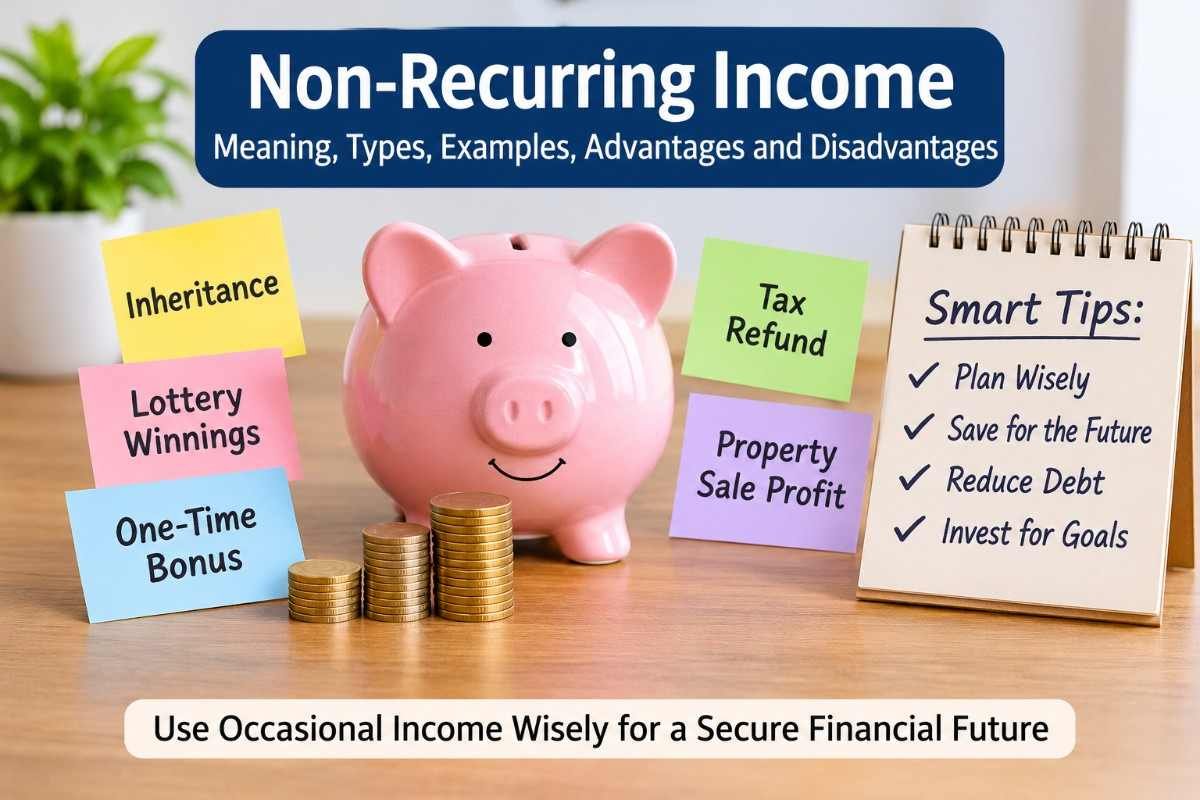
Non-Recurring Income: Types, Examples, Advantages & Disadvantages

Non-Recurring Income

Money can come into our lives in different ways. Some people receive a regular salary every month, while others earn money through business profits, investments, occasional projects, or unexpected financial gains. However, not every source of income provides money regularly. This is where the concept of Non-Recurring Income becomes important. Non-recurring income refers to money … Read more

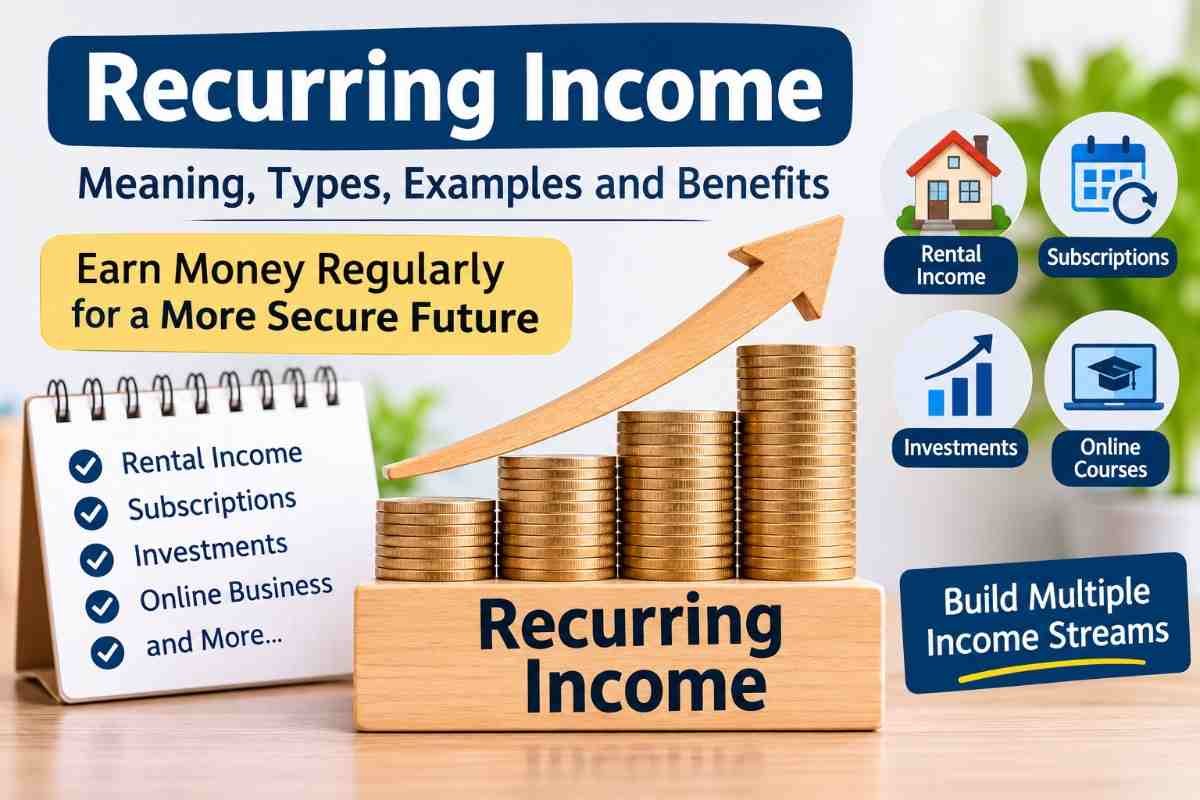
Recurring Income: Types, Examples, Advantages & Disadvantages

Recurring Income

Recurring income is money a person or business receives regularly from the same source over a specific period, such as weekly, monthly, quarterly, or annually. It can come from rental properties, subscriptions, memberships, investments, online businesses, or other arrangements that generate repeated payments. In today’s economy, recurring income has become an important financial concept for … Read more

Unearned Income: Types, Examples, Advantages & Disadvantages

Unearned Income

Have you ever wondered how people receive money without working a regular job? For example, someone may earn interest from a savings account, receive dividends from stocks, collect rent from a property, or receive money through an inheritance. These are examples of unearned income. Understanding unearned income is an important part of financial education because … Read more

Earned Income: Types, Examples, Advantages & Disadvantages

Earned Income

Earned income is one of the most common ways people make money. Whether someone works in an office, teaches students, runs a small business, drives for a delivery service, or provides freelance services, the money they receive for their work is generally considered earned income. Understanding earned income is an important part of financial education … Read more

Portfolio Income: Types, Examples, Benefits, Risks & How It Works

Portfolio Income

Have you ever wondered how people make money from investments without working for an employer or running a business every day? One way is through portfolio income. Portfolio income is money earned from investments such as stocks, bonds, mutual funds, and other financial assets. It allows individuals to earn returns through interest, dividends, and profits … Read more

Active Income: Types, Examples, Advantages & Disadvantages

Active Income

Income plays an important role in our everyday lives. Whether we work in an office, run a business, provide freelance services, or work as a consultant, we earn money by using our time, skills, and effort. This type of income is commonly known as active income. Active income is one of the most common ways … Read more

Passive Income: 15 Types, Examples, Benefits & Risks

Passive Income

Passive income is a way of earning money that does not require constant, active involvement in daily work. It allows people to build additional income sources through investments, digital products, rental properties, royalties, and other income-generating activities. In today’s world, many people are interested in learning about passive income because relying on a single source … Read more

Zero-Based Budgeting | Definition, Methods, Example, Process, Advantages & Disadvantages

What is Zero-Based Budgeting ? Zero-based budgeting (ZBB) is a financial management approach where all expenses must be justified for each new period, regardless of whether they are carried over from previous budgets. Unlike traditional budgeting methods, which typically start with the previous budget as a baseline and adjust from there, ZBB requires a thorough … Read more

Preference Shares | Definition, Types, Feature, Advantage & Disadvantage

Preference Shares


Contents : 
  • Meaning & Definition of Preference Shares.
  • Features of Preference Shares.
  • Classification / Types of Preference Shares.
  • Advantages and Disadvantages of Preference Shares.
  • Differences Between Equity Shares and Preference Shares.

What do you mean by Preference Shares ? 


The parts of corporate securities are called as preference shares. It is the shares, which have preferential right to get dividend and get back the initial investment at the time of winding up of the company. Preference shareholders are eligible to get fixed rate of dividend and they do not have voting rights.

Meaning of Preference Shares 


Preference shares are those shares which carry certain priority rights in regards to the payment of dividend and return of capital and at the same time are subject to certain limitations with regard to voting rights. According to Indian Companies Act, 1956 Preference share is that part of the share capital of the company which is endowed with the following preferential rights :

i) Preference as to fixed rate of dividend.
ii) Preference as to repayment of capital in the event of the company being winding up.

Preference shareholder is entitled to receive the fixed rate of dividend out of the net profits of company prior to declaration or distribution of dividend on equity shares. The available net profits of the company are applied for paying specified rate of dividend to preference shareholders.