
Accounting on Accrual Basis & Government Accounting

What is Government Accounting ?  Government accounting is the process of recording. analyzing. classifying summarizing, communicating and interpreting financial information about government in aggregate and in detail reflecting transacts and other economic events involving the receipt, spending, transfer, usability and disposition of assets and liabilities. Accounts are kept for a wide variety of administrative entities: … Read more

What is National Voluntary Guidelines? | Meaning, Principles and Implementation

What is National Voluntary Guidelines ? The NVGs serves as a guidance document for businesses of all size, ownership, sector, and geography to achieve the triple bottom line. In 2012, subsequent to the release of the NVGs the Securities and Exchange Board of India (SEBI), a market regulator, mandated the Annual Business Responsibility Reporting (ABRR), … Read more

What is Corporate Governance? | Definition, Elements & Report

Contents : Meaning and Definition of Corporate Governance. Elements of Corporate Governance. CEO/ CFO Certification. Report on Corporate Governance. Verification of Compliance of Corporate Governance. What is meant by Corporate Governance ? Meaning of  Corporate Governance : Corporate governance is the set of processes, customs, policies, law, and institutions affecting the way a corporation/ company is … Read more

What is BPO & KPO? | Meaning, Types, Goal, Advantages & Disadvantages

Outsourcing

Contents :

  • Meaning of Business Process Outsourcing (BPO).
  • Types of BPO’s.
  • Advantages & Disadvantages of BPOs.
  • Meaning of Knowledge Process Outsourcing (KPO).
  • Goal and Motive of KPOs.
  • Benefits of KPOs.
  • KPOs in India.
  • Books of Account and Methods of Accounting Maintained by KPO and BPO.

What is meant by Business Process Outsourcing (BPO) ?
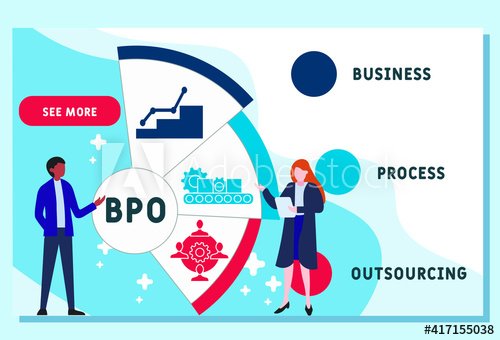
Business Process Outsourcing (BPO)


Due to the faster communication and speedy means of transport, the World has become smaller. Further, because of globalization, trade barriers between countries are getting dismantled. As costs of different inputs for different industries can vary widely in different countries, industrialists and businessmen now have a wider choice for manufacturing their entire range of products or parts of products at different locations, where the costs are cheaper. In other words, they can outsource part or the whole product to an outside party.

Meaning of Business Process Outsourcing (BPO) :


Business process outsourcing means handing over some functions and processes to a business process outsourcing company which studies these functions and processes thoroughly.
Outsourcing became popular with the development of Information Technology. Experts in information technology in developed countries like Europe and USA, cost a huge amount. However, the same work can be done at a much cheaper price in countries like India, Mexico or China where the labour is comparatively cheaper. Because of internet, it is also very easy and quicker to transfer enormous amounts of data over long distances and therefore, there are no transportation costs involved. This concept started getting very popular in the USA, where labour is expensive. With the highest kind of scientific and technical education being available in the USA, most manufacturing companies producing goods right from eatables to huge trucks, now resort to outsourcing.
For example, car manufacturers in USA, would like to get certain parts manufactured in Korea or Taiwan or India, where costs of labour is much lower.
There are many electronic products where the design is made in USA, but the manufacturing is done in China.
Business process outsourcing can be done fully or partially. In case of fully outsourced business, the entire manufacture or processing is done outside and only the finished product is bought back to be sold under the own name and brand of the outsourcing company. The outside company or enterprise has its own building, machinery and the entire management set-up. The only thing it does not have to do is marketing. Because the entire output is sold to the outsourcing company. In case of partial outsourcing, only partly processed information or spare parts are sold back to the original enterprise.

Types of BPO’s :


In case of IT BPOs the following types are often seen.

1) Back Office Outsourcing :
Here, the original office retains its main external office where meetings and reactions with external agencies take place. But, all internal processing of information is outsourced.
For example, in an institution like LIC, where there are millions of policies to be issued, a substantial amount of data processing is required. LIC therefore, outsources the data feeding portion to outside agencies.

2) Front Office Outsourcing :
Many institutions have now started outsourcing front office functions like receiving new customers and giving them introductory information about the company and so on.

3) Off-shore Outsourcing :
Some developed countries where labour costs are high, give out work in other developing countries. This is off-shore outsourcing.

4) Near-shore Outsourcing :
Outsourcing to neighboring countries would be near-shore outsourcing.

Advantages of BPOs :


1) Concentration on Main Business :
By giving part of the work outside, the organisation can concentrate more on the main business and carry out expansion more efficiently.

2) Reduces the Overheads :
Outsourcing generally reduces the total expenses of an organisation as part of the work is done by less paid work force.

3) Increase in Quality :
By outsourcing a part of the activity to a specialized agency, can increase the quality of the final output of an organisation.

4) Reduces the Stress :
Outsourcing reduces the stress on a company’s work force as the responsibility now gets divided.

Disadvantages of BPOs:


1) Leads to Unemployment :
Outsourcing can result in making some employees redundant in the original organisation and can lead to unemployment, as is happening in USA at the moment.

2) Reduces the Desire of Work :
Outsourcing lessens the desire of the existing work force to put in their maximum productivity as they would like more and more part of the work getting outsourced.

3) Loses its Knowledge :
Outsourcing can result in a company doing only trading and lose its manufacturing knowledge and expertise altogether. Car manufacturers in USA, for example, may stop manufacturing cars altogether, if they outsource entire production to Korea or Japan.

4) Trade Secrets are Out :
Outsourcing can result in letting out trade secrets to outside organisations and hence, the original company lose its own expertise altogether.

What do you mean by KPO (Knowledge Process Outsourcing) ? 
Knowledge Process Outsourcing (KPO)

As we move further into the Information Age, our success lies in our ability to apply the knowledge that we have obtained. Some of the changes that are occurring in Information Technology are astounding. It will change the face of the business word forever. In this knowledge era, our success depends on what we know and what we do with what we know. Perhaps one of the most impressive phenomena to occur in the countries such as India is KPO, or knowledge Process Outsourcing. “The maturity and success of outsourcing strategies is leading businesses to shift towards the offshoring of high-end processes to low-wage destinations. This is referred to as Knowledge Process Outsourcing.

Meaning of Knowledge Process Outsourcing (KPO) :


KPO involves knowledge-intensive business processes that require significant domain expertise, analytic skills and judgment and decision making capabilities.

Goal and Motive of KPOs :


The goal of KPO is to deliver value by providing superior expertise decision-making as opposed to cost saving alone. Therefore, companies can improve top line result and better their bottom line.
The main motive behind KPO is to allow companies to invest time, money and human resource into main processes and fuel growth. It helps free up an organisation’s capital and reduces costs besides allowing the company to save on human resource costs it would otherwise have to incur. It presents organisations with an opportunity for radical improvement. The rise of a new class of KPO providers creates strategic growth for new ways to maximize the productivity and innovation of existing resources and divert focus by running their own captive centre.

Expected Benefit of KPOS :


  1. More granular market and customer segmentation.
  2. More predictive response modeling and propensity cross-sell/up sell modeling.
  3. Precision marketing, churn prediction and management, customized products and services in finance, insurance, telecom services.
  4. For retailers, store and shelf space management at neighborhood market level and store level.
  5. Promotional efficiency tracking at micro-market level.
  6. Category/brand performance measurement tracking and control at micro-market level.
  7. Market mix modeling at lower granularity levels of product, geography and time dimensions.
  8. Precision and dynamic pricing, promotion and product portfolio design and optimization.
  9. Primary, secondary and web-based market research.
  10. Monetization, predictive analysis and portfolio management of intellectual property and patents.

KPOs in India :


India is emerging as a key player in the KPO space due to its large base of highly qualified professionals. India has advantages over other locations as an offshore destination for KPO. The depth of knowledge, judgement and expertise that India’s abundance of educated professionals can offer drives KPO. From doctors and lawyers to chemical engineers and Ph.D.s, India is the world’s third largest brain bank with approximately 2.5 million technical professionals. In India, six times more people go to universities than in China. And, it is no surprise that India is developing into the second largest English speaking resource in the world.
A KPO does highly skilled domain specific work. It has the requisite expertise to execute complex tasks. Talent looking for KPO jobs needs to have high level of domain expertise.

1) Basic Requirements for KPO Jobs :
  • Excellent communication skills 
  • College education
  • Good soft skills
  • Domain expertise

2) Areas of KPO Jobs :
KPO jobs are available in the following functional areas like :
  • Operations
  • Finance
  • Human Resources
  • IT

3) Advantages of KPO Jobs :
Some of the advantages of KPO jobs are as follows:
  • Global exposure.
  • Industry standard HR practices.

4) Distinctive Practices for Successful KPO :
Unlike BPO, which has become a commodity operation, KPO service providers need to have distinguished practices and demonstrate deep vertical make domain expertise. Domain-specific knowledge is the key to understanding the business context and delivering timely revenues impacting insight that what differentiates KPO from BPO. Providers who can demonstrate that domain knowledge will operate at the high-end of the value chain and provide their clients with significant value.

Books of Account and Methods of Accounting Maintained by KPO and BPO


BPO and KPO are the companies providing services to various business. These are the services organisations handling some function and processes of a company situated in other countries. Business process outsourcing can be done fully or partially. KPO involves knowledge – intensive business processes. These organisations. Companies receive their fees in foreign currencies. These companies have to maintain their books of accounts as per the rules and regulation in Foreign Contribution and (Regulation) Act, 1976 and Rules framed thereunder, and as per the norms and conditions of International Accounting Standards.

Books and Record to be Maintained :


  1. All associations, which have received foreign contributions are required to maintain separate books of accounts.
  2. FCRA specifies that the books of account should be maintained on the principles of double-entry book keeping on yearly basis from 1st April to 31st March of the year.
  3. Every year Balance Sheet and Receipts and Payments accounts are required to be prepared and certified by a Chartered Accountant.
  4. Record of contribution received in kind is required to be maintained as per Proforma provided in FC-6.
  5. Where organisation has received foreign securities, Form FC-7 is required to be followed to maintain the records of such securities.
  6. It may be noted that separate books or accounts specifically for foreign contribution are required to be maintained.
  7. Under no circumstances, domestic contributions should be mixed up with foreign contributions.
  8. In case of contributions received in kind, the approximate value is required to be mentioned in Form 6 and is also required to be reported in Form FC-3.
  9. FCRA does not specifically prescribe any method of accounting. Therefore, a organisation should continue to maintain its account on the method of accounting it has been following prior to FCRA registration.
  10. The FC-3 statement should be prepared on cash basis, based upon the receipt and payment account.

Accounting for Foreign Contribution Received in Kind :


As per rule 8 (1)(a), account has to be maintained for foreign contribution receive in kind. Form FC-6 provided the format and the manner in which the receipt as we as the utilization of contributions received in kind. The entries made in FC-6 should correspond with entries made in Form FC-3.

Maintenance of form FC-6 – An organisation may keep the Form FC-6 in a book form, Form FC-6 requires the following information to be recorded in case of receipt :
i) Date
ii) Name and Address of the Donor
iii) Mode of receipt
iv) Purpose of receipt
v) Quantity received
vi) Approximate value
vii) Date of intimation sent to Central Government

Recording of specified information With regard to utilization and disposal of contributions received in kind, Form FC-6 requires the following information to be recorded :
i) Date
ii) Name and Address of the Donee
iii) Purpose
iv) Quantity utilized by the organisation
v) Quantity sold
vi) Quantity otherwise transferred
vii) Quantity, if sold, the amount for which sold
viii) Reference to entry in FCRA account
ix) Quantity in stock

It may be noted that it is not necessary to file Form FC-6 with FCRA return in Form FC-3. In case when article is sold and some revenue is generated in Indian currency, such amount should be shown as receipt in Form FC-3 as wel as the FCRA cash book.

Approximate Value of Contribution Received in Kind :


Form FC-6 is like a stock register, where the receipt movement and closing balance of all goods received in kinds are maintained in quantitative term. But, column-6, of the Form requires approximate value of the goods to be specified. In this context, it may be further noted that, the approximate or the estimated value of contribution received in kind is required to be reported in Form FC-3, column 688. Therefore, for reporting purposes of contribution received in kind, column 6 & 8 of the Form FC-3 are relevant and Form FC-6 is just a format for preparing the books of accounts with regard to contribution received in kind.

‘Cash Basis’ Method of Accounting :


There is a commonly prevailing understanding that FCRA prescribes ‘Cash Basis’ method of accounting. Such presumption has resulted due to the requirement of furnishing receipt and payment account along with Form FC-3 as per Rule 8(2). But, there is no specific mention of the method of accounting to be followed by the organisation for FCRA purposes. Section 13, talks about the maintenance of accounts, but there is no reference to the method of accounting to be followed by the organisation. The text of section 13 is reproduced as under :
Recipients of foreign contribution to maintain accounts etc. very association, referred to in section 6, shall maintain, in such form and in such manner as may be prescribed :
a) an account of any foreign contribution received by it,
b) a record as to the manner in which such contribution has been utilized by it.
It is evident from Section 13 that no specific method of accounting has been prescribed. But the intent and requirement of FCRA in this regard are to some extent clarified in Rule 8 of FCR Rules, 1976. The text of Rule 8 is reproduced ‘as under :

Maintenance of Accounts :

1) Separate set of accounts and records shall be maintained, exclusively for foreign contribution received and utilized :
a) in Form FC-6, where the foreign contribution relates only to articles as referred to in item (1) of sub-clause(c) of clause (1) of section 2;
b) In the cashbook and ledger account on double entry basis, where the foreign contribution relates to currency received and utilized, and a separate bank account shall be maintained in respect of such contribution;
c) In Form FC-7, where the foreign contribution relates to foreign securities.

2) Every account specified in sub-rule (1) shall be maintained on an yearly basis commencing on the 1st day of April each year and every such yearly account duly certified by a chartered accountant in Form. FC-3 along with a Balance Sheet and statement of Receipts and Payments, shall be furnished, in duplicate to the Secretary to the Government of India, in the Ministry of Home Affairs, New Delhi, within four months of the closure of the year.”
From the above, it can be seen that as per Rule 8 (1) (b), all organisations are required to maintain separate books of account for foreign contribution received and utilized. The books of accounts required are ledger and cash book maintained on the principles of double entry. Further Rule 8(2), specifies that Balance Sheet and Receipts & Payments Account should be submitted. There is no mention of the specific method of accounting to be followed by the organisation.

Reporting in FC-3 Form :


From the reporting requirement of FCRA, it is evident that the authorities are interested in the actual receipts and utilization of FCRA funds. If we see the Form FC-3, we find that the reporting is to be made for the receipts and utilization of FC. FCRA also requires submission of receipt and payment account along with FC-3 return. The intent of FCRA is very clear that it wants the organisation to report all the FC transactions on cash basis. In other words, the organisation should report the actual receipt and payment of foreign funds during the previous year irrespective of the method of accounting followed. The organisation which are following accrual basis of accounting should not prepare the FC-3 statement on the basis of their income and expenditure account. The FC-3 return should be based on the receipt and payment account. As long as the organisation is complying with the reporting requirements of FCRA, it does not seem necessary to change the method of accounting only for the purposes of FCRA.


Read more

Creative Accounting: Objectives, Example & Terminology

Creative Accounting


What is meant by Creative Accounting ? 


In the accounting world, the general rule is that accounts should give a true and fair view. Generally, an accountant has a professional responsibility to comply, a corporation has a legal responsibility to comply, auditors have a legal responsibility to give some sort of opinion on compliance, yet frequently this all goes out of the window. Frequently, accountant and businesses are motivated to produce accounts that don’t show a true and fair view. Not only this, but auditors rely on sampling and somehow fail to spot there is a problem.

Contents : 

  1. Meaning of Creative Accounting.
  2. Objectives of Creative Accounting.
  3. Motivations for Creative Accounting.
  4. Examples of Creative Accounting.
  5. Terminology in Creative Accounting.
  6. Creative Accounting by Capitalising Expenditure.

Meaning of Creative Accounting :


Creative accounting is the practice of producing financial accounts that suit a particular purpose but do not really show the true and fair view. Sometimes the accountant may wish to show favorable profits (e.g. to get a bonus) at other times losses (e.g. to pay less tax). Sometimes the accountant may wish to show a healthy balance sheet (e.g. to get a bank loan), at other times an unhealthy balance sheet (e.g. before a management buy-out to get a bargain). Creative accounting often fools auditors and regulators, e.g. Enron, WorldCom, and the recent Madoff case.

Creative accounting is a term referring to accounting practices that may follow the letter of the rules of standard accounting practices but certainly deviate from the spirit of those rules. It is characterized by excessive complication and the use of novel ways of characterizing income, assets or liabilities and the intent to influence readers towards the interpretations desired by the authors. The term ‘innovative’ or ‘aggressive’ are also sometimes used.
The term is generally understood refers to systematic representation of the true income and assets of corporations or other organisation. Creative accounting is at the root of a number of accounting scandals. Creative accounting always starts with human intervention.

Definition :

Creative accounting is the use of unorthodox message parlor techniques which, while following provisions of GAAP, paint a desired (negative or positive, as the case may be) picture of a firm’s finances. For example, selling an asset (Whose market value is high but book value is low) to create non-operating profit that offsets operating loss. Unlike cooking the books, creating accounting is generally legal. It is also called as earnings management.

What are the Objectives of Creative Accounting ?


Creative accounting always starts with human intervention. Rarely can a system, even the most advanced accounting system, create profits and assets out of thin air. Creative accounting can be caused by human error, but statistically, some of these errors would have a positive effect on profits, others would have negative effects.

Objectives of Creative Accounting :


Therefore, a typical creative accounting incident involves both human effort and a bias towards some objective.

1) Increased Profit :
Most typically the objective is increased profits, inflated asset values, understated liabilities, and overstated shareholder value.

2) Management Motivation :
The motivation of management and accountants typically being bonuses, promotion, salary rises, etc.

3) Seeking Promotions :
There can be other objectives of creative accounting. Most managers and accountants perform a given role for two or three years before seeking a promotion. Therefore throughout that period they are motivated to show increases in profitability (year on year growth). This results in a form of creative accounting that smooths out income and costs so that the result over the two or three year period is a growth in profits.

4) Takeover and Acquisitions :
Takeovers and acquisitions also create opportunities for creative accounting. In the year of the takeover, the new management and accountant have a bias to show a dismal picture – low profits, deflated asset values, inflated provisions, and perhaps an impacted stock value (as a result of the poor results if they are made public). Then in the years proceeding the takeover, the assets can be re-inflated, provisions released, all contributing to increased profits and a perception that the new management is doing a great job.
The above technique may also be used before a management buy-out. This helps the new buyers negotiate a lower purchase price, and increases their return after the buy-out.

5) Other Objectives :
There are other objectives of creative accounting. For example :
a) To keep the company’s financial results within agreed limits set by creditors,
b) To fulfill public listing requirements,
c) To help negotiations with regulators,
d) To pay less tax,
e) To push the company towards insolvency.

What is Transfer Pricing? | Objectives, Methods, Need & Problem

Transfer Pricing

Contents :

  • Meaning of Transfer Pricing.
  • Objectives of Transfer Pricing.
  • Needs for Transfer Pricing.
  • Methods of Transfer Pricing.
  • Administration of Transfer Prices.
  • Transfer Pricing problems.

What is meant by Transfer Pricing ? 


One of the principal problems in operating a profit centre system is to devise a satisfactory method of accounting for. the transfer of goods and services from profit centre to another. Since in most companies, there are significant amounts of intra-company transactions, this problem is a common one. Various approaches can be studied for arriving at transfer prices for transactions between profit centres and the system of negotiation and arbitration that is essential when transfer prices
are used.

Meaning of Transfer Pricing :


Transfer pricing is a management control tool for decentralized organisations to control performance of their divisions. The established transfer price is a cost to the division which receives the goods and services while it will be a source of revenue, to the division which is transferring such goods or services. The transfer price affects the profitability of each division. In the same way, it will also significantly influence each division’s input and output decision and thus, the total company profits.

Objective of Transfer Pricing :


A sound transfer price system should accomplish the following objectives.

1) Divisional Autonomy :
When the unit is being declared as an independent profit centre, then it must be given autonomy to carry out its functions. It should motivate the division manager to make sound decisions. The transfer prices should communicate information to the managers to take such decisions. Such information must be reliable information. The manager takes certain actions to improve the reported profit of his division. This also improves the profit of the company as a whole.

2) Divisional Performance Appraisal :
The transfer price should result in a report of divisional profits that is a reasonable measure of the managerial performance of the division. When goods are transferred from one division to another, a portion of the revenue of the supplying division becomes a portion of the cost of the receiving division. Consequently, the prices at which goods are transferred can influence each division’s reported profits and there is a danger that an unsound transfer price will result in a misleading performance measure that may cause divisional managers to believe that the transfer price is affecting their performance rating unfairly. This may lead to differences amongst the managers and result in negative motivation.

3) Goal Congruence :
The prices should be set so that the divisional management’s desire to maximize divisional earnings is consistent with the objectives of the company as a whole. The transfer prices should not encourage sub-optimal decision-making.

Computer Information System (CIS) Audit Environment

Contents : Meaning of Computerized Information System Audit Environment. Features of Computer Information System Audit Environment. Uses of Computer for Auditing Purposes. Computer Assisted Audit Techniques and Tools. Need for Review of Internal Control. What is meant by Computerised Information System (CIS) ? Introduction : Nowadays, there is growing use of computers in business organisations … Read more

What is Inflation Accounting? | Methods, Objectives & Need

Inflation Accounting


Contents :

  1. Meaning of Inflation Accounting.
  2. Objectives and Need of Inflation Accounting.
  3. Advantages and Disadvantages of Inflation Accounting.
  4. Methods/Techniques of Inflation Accounting.

What is Meant by Inflation Accounting ? 


Introduction :

The basic objective of Accounting is the preparation of financial statements is a way that they give a true and fair view of the operating results and the financial position or the business to its various users, namely investors, creditors, management Government, trade unions, research institutions etc. These financial statements are prepared based on certain accounting concepts and conventions. The money measurement concept is a basic attribute of accounting. The money measurement concept states that only those business transactions that are capable of being expressed in terms of money can be recovered in the books of account. It also assumes that the monetary unit used for recording the transaction is stable in nature. 
However, this is not true in practice as many countries, developed as well as developing, have been experiencing inflation of high magnitude in recent times. Inflation refers to state of continuous rise in prices. It brings downward changes in the purchasing power of monetary unit. Thus, financial statements prepared without taking into account the change in purchasing power of the monetary unit lose their significance. There is a demand that business enterprises should prepare inflation adjusted financial statements. The different ways through which financial accounts can be adjusted for changing prices is studied under the subject “Inflation Accounting”. Given that price changes can also be downward, it is more appropriately called “Accounting for price level changes“.


History of Inflation Accounting :


Inflation accounting was practiced in the Us by the American Institute of Certified Public Accountants for over 50 years. During the period of Great Depression many companies reconstructed their financial reports recording the inflation in them. During those 50 years many companies were encouraged to record the price-level adjusted statements in place of cost-based financial statements. The FSAB or the Financial Accounting Standards Board raised a proposal of publishing the price-level adjustment statements which was withdrawn by them later due to certain problems.

Meaning of Inflation Accounting :


Inflation accounting is a term describing a range of accounting models designed to correct problems arising from historical cost accounting in the presence of high inflation and hyperinflation.Inflation accounting may be described as an attempt to portray financial performance of business enterprises on the basis of current prices. Special accounting techniques, which can be used during periods of high inflation. Inflation accounting requires statements to be adjusted according to price indexes, rather than rely solely on a cost accounting basis. Companies operating in countries experiencing hyperinflation may be required to update their statements periodically, in order to make them relevant to current economic and financial conditions.

Explain the Need and Objectives of Inflation Accounting.

Objectives of Inflation Accounting :


Inflation accounting aims at infusing the element of realism in the process of compilation of the financial statements, by making the necessary adjustments (in the figures of the historical costs) to the best possible extent, with a view to representing the currently prevailing prices of the various items in the market, caused by the effect of inflation. It reflects, in a true and fair manner, the financial position and performance, profitability and prospects, of the enterprise, during the respective accounting periods. In other words, it aims at convening the monetary units, having different purchasing powers, into one single monetary unit, whose purchasing power is uniform for various valuations and computations. The resultant effects of the inflation accounting adjustments are :
  1. To enhance the meaning and measurement of the income and expenditure of the enterprise, keeping in view the ever-changing purchasing power of the momentary unit, the specific currency.
  2. This, in turn makes the intra-firm comparison of the financial results of the company more realistic, rational and meaningful.
  3. To highlight and specify the effect of inflation on different enterprises, depending upon their different nature of business as also the operating features.
  4. To provide a meaningful and reliable database, facilitating a realistic and rational decision-making process in the organisation.

Need for Inflation Accounting :


Inflation, especially when it is prolonged and high, reduces considerably the meaningfulness and use of the corporate accounts because the various amounts in current rupee values may not signify proportionate real amounts, as the real worth of the rupee varies in different years. Moreover, arithmetical operations involving different amounts in rupees having different real worth become quite misleading. To make the accounts more meaningful, all items should be expressed in values relating to common year. This is attempted through inflation accounting, the following reasons usually being advanced in its favor.
  1. It helps to correct the usually distorted picture of the financial operations and condition of a company presented by the conventional system of accounts.
  2. It facilitates inter-company comparisons since inflation hits different firms in different degrees.
  3. It also facilitates inter-period comparisons of the performance of firm.
  4. Correct measurement of income is possible only with inflation accounting.
  5. When some nominal value in the accounts forms the basis of government action, e.g., taxation based on profits, MRTP Act measures based on nominal value acting as proxy for relevant variables, determination of controlled price on the basis of nominal profits and so on, inflation may cause unfair decisions by the government, unless the relevant nominal value is adjusted for inflation.


Responsibility Accounting: Objectives, Advantages & Limitations

Responsibility Accounting


What is Responsibility Accounting ? 

Contents :

  1. Meaning and Definitions of Responsibility Accounting.
  2. Advantages / Importance of Responsibility Accounting.
  3. Principle and Objectives of Responsibility Accounting.
  4. Limitations of Responsibility Accounting.
  5. Types of Responsibility Centre.


Meaning of Responsibility Accounting :


Responsibility, accounting is a management control system based on the principles of delegating and locating responsibility. The authority is delegated on responsibility centre and accounting for the responsibility centre. Responsibility accounting is a system under which managers are given decisions making authority and responsibility for each activity occurring within a specific area of the company. Under this system, managers are made responsible for the activities of segments. These segments may be called departments, branches or divisions etc., one of the uses of management accounting is managerial control. Among the control techniques “responsibility accounting” has assumed considerable significance. While the other control devices are applicable to the organisation as a whole, responsibility accounting represents a method of measuring the performance of various divisions of an organisation. The term ‘division’ with reference to responsibility accounting is used in general sense to include any logical segment, component, sub-component of an organisation. Defined in this way, it includes a decision, a department, a branch office, a service centre, a product line, a channel of distribution, for the operating performance it is separately identifiable and measurable is somewhat of practical significance to management.

Definitions of Responsibility Accounting :


Institute of Cost and Works Accountants of India (ICWAI) :
“Responsibility Accounting is a system of management accounting under which accountability is established according to the responsibility delegated to various levels of management and management information and reporting system instituted to give adequate feed-back in terms of the delegated responsibility. Under this system divisions or units of an organisation under a specified authority in person are developed as responsibility centers and are evaluated individually for their performance”.

Robert Anthony :
“Responsibility accounting is that type of management accounting which collect and reports both planned and actual accounting information in terms of responsibility centers”.

Charles T. Horongrent :
“Responsibility Accounting or profitability accounting or activity accounting which means the same thing, is a system that recognizes various decision or responsibility centers throughout the organisation and traces costs (and revenue, assets and liabilities) to the individual managers who are primarily responsibility for making decisions about the costs in question.”

Advantages of Responsibility Accounting :


The advantages of responsibility accounting for management can be explained in the following way :

1) Easy Identification :
It enables the identification of individual managers responsible for satisfactory or unsatisfactory performance.

2) Motivational Benefits :
If a system of responsibility accounting is implemented, considerable motivational benefits are assured.

3) Data Availability :
A mechanism for presenting performance data is provided. A framework of managerial performance appraisal system can be established on that basis, besides motivating managers to act in the best interests of the enterprise.

4) Ready-hand Information :
Relevant and up to the minutes information is made available which can be used to estimate future costs and or revenues and to fix up standards for departmental budgets.

5) Planning and Decision Making :
Responsibility accounting helps not only in control but in planning and decision making too.

6) Delegation and Control :
The twin objectives of management are delegating responsibility while retaining control are achieved by adoption of responsibility accounting system.

7) Help in Training Future Management :
Responsibility accounting helps for training future management of an organisation.