What is Labelling ? | Definition, Role, Purpose, Types of Labels

Labelling
Contents :
  • Meaning and Definition of Labelling.
  • Purpose of Labelling.
  • Types of Labels.
  • Role of Labelling.

What is Labelling ? 


The section of the product which conveys the details of the product and the seller is called as ‘labelling’. It specifies the information about the product like its brand name, components, brand logo, instructions to be followed while using the product, promotional messages, if any. A label can be a portion of the packaging or a small sheet may be fixed with the product itself.

Definition of Labelling


According to William J. Stanton :
“The label is that part of the product which carries verbal information about the product or the sellers (manufacturers or middlemen). A label may be part of the package or it may be a tag attached directly to the product.”

According to Mason and Rath :
“The label is an information tag, wrapper or seal attached to a product’s package.”

Many varieties of labels are available in the market consisting of plain tags affixed to the main product or typical graphics on the package. One of the basic roles of label is to give the product identification or its concerned brand. 
For example, Sunkist imprints its brand name on oranges. A lot of information related to the product is displayed on the label including details of
the manufacturer, production location, date of manufacture, ingredients, safety precautions, and instructions for use, etc. It can also be used to promote the product by some attractive pictures and illustrations.

Purpose of Labelling


Label specifies the qualities and other aspects of the product which enables its sale. Following points highlight the purpose of labelling :

1) Brand Identification : 
Labelling is used to provide information regarding the entity, i.e., the manufacturer of the packaged product and who outsources it. It provides the details about the location where the pre-packaged product is produced, processed, or distributed.

2) Description : 
Description about the product contents, expiry date, price, user manuals, etc., is given through labelling. In case of packaged food items, nutritional value is also provided.

3) Promotion : 
Labelling is also required for promoting the product, and brand. New and appealing graphics are useful to advertise and popularize the product. It helps in building brand image.

4) Other Purposes :
  • A specific label of a product will help to segregate the product from other several products available in the outlet It assists the purchaser to make the right choice as per his or her specific requirements. It specifies the quality and level of the product.
  • It creates a sense of assurance about the product and also enables the consumers to determine the standard of the product.

Types of Labels


There are three basic categories under which labels can be classified. These three categories are discussed below :

1) Brand Label : 
In this type of label only the name of the brand is given on the product’s package. It specifically aims at advertising and promotion of the brand name of the manufacturer. For example, Dhara cooking oil, Tata salt, etc. No other information about the product is provided on these types of labels. Mainly the manufacturers of consumer goods prefer to use such labels.

2) Grade Labels : 
Many a time the manufacturers produce more than one type of product in same product category; in such cases the grade labels are used. Grade labels describe the type of the product (quality of product, grade of product, etc.). This helps the consumers and the intermediaries to identify the product easily. For example, Green Tea, Tea Bags, Leaf Tea, etc. However, the label does not contain any other information about the product or the producer beside the product type.

3) Descriptive and Illustrative Label : 
Such labels are descriptive and illustrative. They give detailed information to the consumers about the product and its producer. It also contains information, such as date of manufacturing, date of expiry, quantity and quality of the product, ingredients, and directions for use, etc. It is mainly used for the products, such as medicines and cosmetics.

Role of Labelling


Roles of labelling are discussed below :

1) Identifies Product : 
The main role of labelling is to allow the customers to know the product and the concerned brand and thus publicize or familiarize the brand name and the product. The features and other details of the product are given by labelling. It informs the positive attributes of the product, helping it to become a fast moving item in the market.

2) Grades Product : 
The standard of the product is reflected on its label. Division of the product in various grades as per its quality can be done with labelling. For example, classification of wheat can be done in grades; 1, 2, 3 or 4 and respected grades are described on the label.

3) Promotes Product : 
Labelling is also involved in promoting the particular product or brand, Interesting, bright pictures and forms of graphics are used in labelling to grab the attention of customers and encourage them to finally purchase the product. With effective labelling, the customers are inclined towards the buying decision, thus making it a crucial factor for increasing the sales and distribution of the product.

4) Protects Customers : 
The label provides details like maximum retail price, quality, quantity of the packaged product, contents, etc., and thus safeguards the consumers from any kind of malpractices or unethical behavior of the dealers or intermediaries. Consumers can differentiate between real and fake brands with the help of labelling.

5) Provides Information Required by Law : 
To provide necessary information related to the product as required by the law, is also an important role of the labelling. Thus, labelling provides the disclaimer or statutory warning about the product. For example, “smoking is injurious to health” and “chewing tobacco is injurious to health” are the two popular statutory warnings provided on the labels of cigarettes and pan masala, respectively. Similarly, relevant statutory warnings need to be given on the labels of other poisonous or harmful products as well.

6) Facilitates Buying Process : 
A specific label segregates the product from other products offered by competitors. It is very important to avoid such confusion in case of medicines and chemicals where a small mistake in the spelling of the brand name can be fatal to the customer.

7) Encourages Self-Service : 
It is an effective instrument to increase sales as it stimulates self-service in large departmental stores and supermarkets. If the label provides the necessary information like the ingredients, price, quantity, quality, taxes, uses, instructions for use, safety warnings, etc., the consumers can decide and purchase the best product on their own. Thus, labelling assists the self-selling firms in their operations by way of promoting self-service.

What is Brand ? | Meaning, Definition, Functions, Types & Levels

Brand

Contents :

  • Meaning and Definition of Brand.
  • Functions of Brand.
  • Levels of Brand.
  • Types of Brand.


What is Brand ?


In management context, branding is a symbolic representation of .information associated with a product or service. A brand particular consists of a name, logo, other visible features including color combinations, fonts, images, symbols, etc. A brand raises a number of expectations in the minds of the individuals in relation with particular goods or service. These individuals may be employees working with the brand, suppliers, vendors and their associates, distributors and lastly consumers.
Brand creation is more than Just giving a name to a product. A brand is essentially a promise that the company makes to customers. It is a promise towards satisfaction of their needs and assuring world-class product and service quality. Three questions “who”, “what” and “why”, are very crucial for the successful branding of any product. Marketers should introduce who the product is, what does it do, and why should consumers know about it.

Definition of Brand :


According to American Marketing Association :
“Brand is a name, term, sign, symbol, or design, or a combination of them which is intended to identify the goods or services of one seller or a group of sellers and to differentiate them from those of competitors”.

Acording to Mellerowicz :
“Brand is defined as branded product as an ubiquitous finished product of consistent or increasing quality for private consumption with an identification mark, standardized amount, and appearance, acceptance in the market and existing consumer advertising”.

What is Product Planning ? | Definition, Importance, Elements & Objectives

Product

Contents :

  • Meaning and Definitions of Product Planning.
  • Objectives of Product Planning.
  • Importance of Product Planning.
  • Elements of Product Planning.
  • Types of Mass Customization.


What is Product Planning ?


Marketing encompasses decisions related to product, price, place, and promotion. Every decision is critical for the effective marketing of the brand. One of these decisions is the product decision which includes all the major aspects related with the product itself. Product planning and development is the most critical aspect of the product decision. Product planning is comprised of both the corporate plan as well as the marketing plan, based on which the product plans are made. Product planning is followed by product development, which involves finding ways to produce the product based on the blueprint of product derived during product plan. The development process also involves the decision regarding product’s feasibility and profitability, i.e., whether developing the product will be profitable for the firm in the long-run or not.
Product planning involves various other decisions like designing, packaging and labeling, branding, pricing, and making alterations in the product as per the requirements of the customers. These decisions are to be taken by the marketing managers.

Definition of Product Planning 


According to W.J. Stanton :
“Product planning embraces all activities which enable producers and middlemen to determine what should constitute Company’s line of products”,

According to Johnson :
“Product planning determines the characteristics of product best meeting the consumer’s numerous desires, characteristics that add stability to products and incorporates these characteristics into the finished product”.

According to Karl H. Tietjin :
“Product planning is the act of making out and supervising the search, screening, development and commercialization of new products; the modification of existing line and discontinuance of marginal or unprofitable items”.

Therefore, we can conclude that the product planning and development is comprised of the product mix decisions related with the product and services which the firm intends to produce and sell. It also includes decisions regarding product policy and strategies, which serve as guidelines for the target market and therefore, help in formulating the target market objectives.

Read more

What is Franchising ? | Meaning, Types, Importance, Limitations

Franchising

Contents :

  • Meaning of Franchising.
  • Definition of Franchising.
  • Characteristics of Franchising.
  • Types of Franchising.
  • Importance of Franchising.
  • Limitations of Franchising.

What is Franchising ?

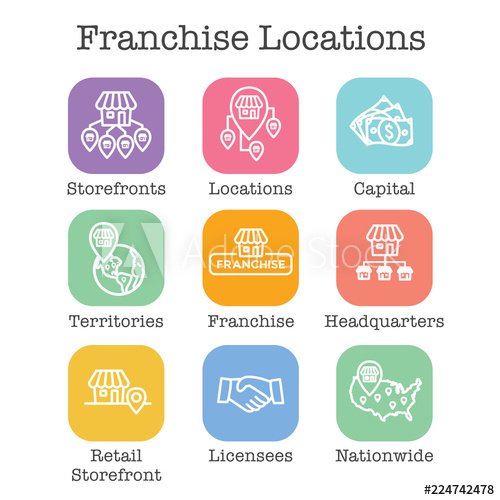
Franchising is an agreement between two entities where the owner (franchisor) of a company grants the right to the other party (franchisee), to use its trade or trademark and also specific business processes and techniques for producing and marketing goods or services. In general, the franchisor lists all the terms and conditions to the franchisee on the basis of which the entire business is conducted. The franchisor provides all these facilities to the franchisee in return of a fee. For this purpose, the franchisee willing to do a business then provides the required time and capital to the franchisor in order to utilize all the available resources. Hence, it is a relationship between the franchisor and franchisee, who are individual business entities, may be in form of sole proprietorship, partnership or corporations.


Definition of Franchising :


According to the International Franchise Association (IFA) :
“Franchising is a continuing relationship in which the franchisor provides licensed privilege to do business, plus assistance in organizing, training, merchandising and management in return for a consideration from the franchisee”.

The franchising model considers only those business firms who are well-established and have goodwill in the marketplace. A company having this can then permit others to use its trade name and business system. A franchise can be successfully executed with simple businesses as they can be easily imitated, like coffee shops, fast food outlets, printing and copying outlets, etc. The franchisor holds a strict control over the processes and activities of the franchisee so as to maintain the goodwill and quality of products/services in the market.

Franchising


Characteristics of Franchising :


Following are the distinct characteristics of franchising :

1) Well-Established Business : 
A franchise is a well-established and successful business which seeks to expand its market share with the help of a local representative.

2) Needs Limited Investment : 
The investment required for entering a franchise is reasonably low as it is already established by the franchisor.

3) Easy Entry in New Markets : 
It is very easy for a franchisor to enter a new market as the company has already established its reputation and goodwill in other markets.

4) Business has Large Establishments : 
Generally, franchise is a large-scale establishment which operates globally through a network of local representatives in different market segments.

5) Facilitates in Diverting Business Risks : 
The owner of a company can diversify his risks by setting-up various outlets in different markets across the world.

6) Results in Large Turnover : 
The management of franchisor and service ability of franchisee benefits the society and results in high sales volume. The turnover is also influenced by the brand name and hyper publicity.

7) Division of Labour and Specialization : 
In franchising, division of labour and specialization is followed. Where the franchisor focuses on the production system, at the same time, franchisee is responsible for distribution and services at unit. This work pattern is beneficial for both, i.e., the franchisor and the franchisee.

8) Allows Use of BI and Name and Trademark :
In a franchise, the franchisee is free to use the trademark and brand name of the franchisor for managing and developing the franchise business around the world.

9) Business is Based on Mutual Agreement : 
A franchising business is based on certain terms and conditions or a mutual agreement on which the franchise business is based upon. This agreement is held on the basis of mutual understanding between the franchisor and the franchisee. The agreement must be drafted in detail to avoid any kind of disputes.

10) Long-Term Relationship to Meet Success : 
A long-term relationship between the franchisor and the franchise is essential for the successful functioning of a franchise business. It ensures the growth and profitability of business in future. Other than this, it also enables the franchisor to sell a franchise more effectively, implement the necessary changes into the system, and motivate the franchisee and its staff members to maintain and improve the quality of products and services.

Types of Franchising :


Various types of franchising options are as follows :

1) Product Franchise : 
Product, franchise is the most elementary and simple form of franchise. In this kind of set-up, a franchisor can be seen as a distributor, who distributes the goods to the retailers with a believe that the retailer is having die authority to sell the products and goods in a specific location. In common practice, these kinds of markets are associated with a certain geographical locations. Car dealership, gas stations and many fashion and FMCG organizations can be seen as a typical example of this category. The older examples of franchising are the product franchise in England and Germany, the beer franchises which are running since early 1800s and are still functional.

2) Manufacturing Franchise : 
Manufacturing or processing franchise is the second form of franchise system which is quite often derived from first type of franchise. In this type of franchise, a certain type of element or particular specification is provided by the franchisor, which is used by the franchisee in the production of the goods. Medicine and soft drinks are the typical examples of this type of system. Other examples are companies having a retailer’s label can manufacture private label goods, and companies having license of a designer label can manufacture fashion apparels.

3) Business-Format Franchise :  
Business-format franchise is the third form of franchise which was developed in the post-war scenario of mid 1950s. In this type of system, an extensive, detailed, operating setup is provided to the franchisee by the franchisor. Each franchisee should follow all the rules and norms of the franchisor; else franchisor has a right to withdraw the franchises. These franchises can be food centres, restaurants, travel agencies, etc.
For example, Pizza Hut, MçDorialds, Holiday Inn, 24-7 convenience store, etc. Business-Format Franchise is the most common form of franchise which is very prevalent in Australia and is considered as a mature sector. In 1999, total 708 franchises were operating in Australia, out of which 677 were using business-format franchise. This is the most widely used franchise format worldwide. The commonly used formats of franchising are as follows :

i) Manufacturer-Retailer Franchise : 
In this kind of format, the retailer is given the authority to sell the products and services of a certain franchisor, e.g., petrol pumps, bike dealership, etc.

ii) Wholesaler-Retailer Franchise : 
In this format, the retailer has a right to distribute the products of the wholesaler, e.g., Health Mart, Max, medical outlets, Titan watches, etc.

iii) Service Sponsor Retailer Franchise : 
In this format, a service organization provides the license to any retailer to serve its customers on the behalf of franchisor, e.g., VLCC centres, Lakme salons, etc.

Importance of Franchising :


The importance of franchising is discussed below :

1) Proven Market for Product or Service : 
A well-known market already exists for the franchiser’s products or services. Facts and figures about the performance of existing franchises can be easily attained from the franchisee. This helps the franchisor to make future projections and decisions. However, it is not a similar case for newly established franchises.

2) Services Provided by the Franchisor : 
A franchisor provides several valuable services to the franchisee. Some of the franchisor’s services are as follows :

i) Assistance in Location Selection : 
A franchisor often provides assistance to the franchisee in selecting an appropriate location for doing business. It is very important for the success of a business, especially off-reserve businesses in service and retail industry. Usually, a franchiser possesses considerable knowledge and expertise in site selection which can be utilized by the franchisee for business development.

ii) Purchase Construction of Site, Buildings and Equipment : 
Franchisor provides assistance in purchase and construction of business site, buildings or equipment. This also saves a lot of time and money.

iii) Provision of Financing: 
Many franchisors financially support their franchisee by providing the required capital. The association of franchisor and franchisee also helps in obtaining financial support.

iv) Standardized Methods of Operating: 
All the standard procedures and methods for operating a franchise is provided by the franchisor. It mainly includes standards for customer service, control system, cost accounting, etc.

v) Advertising : 
Sometimes, franchisors also provide advertising-related services by advertising nationwide. This type of promotion significantly benefits the franchisee, as it may prove to be very costly and difficult for the franchisee to advertise separately.

3) Advantages of Purchasing : 
The franchisor purchases large inventories for franchisee. In these Cases, the franchisees need not have to purchase several items as they are already provided by the franchisor, which results in cost savings.

4) Advantages of Training : 
New franchisees are often trained by the franchisors. These trainings can be in the form of thorough training sessions or instruction manuals. This has a positive impact on the growth of franchisee’s business.

5)Advantages of Marketing and Management :
Franchising business offers a product which is already known and tested in the. market. Customers believe the franchisees due to the goodwill and brand name of the franchisors. Hence, it is easy for franchises to launch and manage a product in the market. The opportunity of having accessible marketing image of the franchise business would be one of the best benefits of selecting a franchising method. This is the reason why most franchisors put all their efforts and abilities in promoting, advertising and marketing of their names, logos, product and services.

6) Quality Control Standards : 
There are certain quality control standards which are imposed by the franchisors on the franchisee. These standards are essential for maintaining the quality of the products, thus, maintaining the goodwill of the business in the market. The franchisee also identifies these standards as essential guidelines for developing and maintaining high standards and considers these as a key reason for the success of business.


7) Less Operating Capital Requirement : 
Usually, franchisees require very less capital for establishing their business. They do not have to spend much on the infrastructure of the business as it is provided by the franchisor at a nominal cost. Having a prior knowledge about the market also helps the franchisee to spend less on inventories, as they are already aware of what product is in demand and what is not.

8) Growth Opportunities :
Several growth opportunities are provided to new franchisees by the franchisors in the form of setting up initial franchise unit and further purchasing additional franchise locations. Because of this, franchisee faces no competition from other franchisees or other outlets in a certain geographic area. This facilitates the new franchisee to start and develop new stores within the specified locations.

Limitations of Franchising :


Different limitations of franchising are as follows :

1) Lack of Independence : 
When a franchisee sign a contract of franchise with a firm, some kind of assistance and help is expected from the franchisor. The franchisor will analyze the performance of business to ensure the realization of franchise agreement. This constrains the liberty and freedom of the franchisee.

2) Cost of the Franchise : 
There is a particular price for acquiring a franchise which includes a start-up fee and royalties based on operations. A person has to pay a specific amount of money either as a fee or has to create the infrastructure in order to take the franchise of a business organization.

3) Unfulfilled Promises : 
In most of the cases, the franchisor provides services like training in operational skills and marketing activities. But, in some cases, such a support is not provided by the franchisor.

4) Constraints of the Contract : 
There may be several clauses of franchise agreement which can limit the liberty of franchisee. They are stated as follows :

i) Product or Service Offered : 
The franchisee may not have the right to sell the product of any other manufacturer.

ii) Line Forcing :
The franchisee has to maintain the whole range of product line produced by the franchisor despite the fact that many products may not be having any market in the area covered by the franchisee.

iii) Termination : 
Without facing the penalties, a franchisee cannot surrender the franchise and he is also not permitted to transfer franchise to his family member or friends and is restricted to sell the product of other companies.

iv) Demand Saturation : 
It has been observed that in many locations, a franchisor gives many franchise which results in the saturation of demand for a certain franchisee and thus many franchisees which are working in that area face financial drawback. A franchisor will try to sell as many franchises as possible irrespective of the success of individual franchisee in a location if franchisor receives huge initial fees with no royalties.

v) Security : 
In case of any violation of agreement conditions, the franchisor has the authority of either terminating the agreement before the contract period is over or not renewing it once it is terminated.

vi) Price of Merchandise : 
Sometimes, the franchisor sells products to the franchisee at higher prices than all the other places. But the franchisee is bound to buy products from the franchisor as per the agreement conditions.
Mass Marketing | Definition, Types, Examples, Strategy, Advantages & Disadvantages

What is Mass Marketing ? Mass marketing is a promotional strategy that targets a wide and diverse audience with the goal of reaching as many potential customers as possible. It involves the creation and dissemination of advertising messages, often through mass media channels such as television, radio, newspapers, and magazines. The key characteristic of mass … Read more

Logistics | Meaning, Definition, Objective, Importance & Components

Logistics

What is Logistics ?


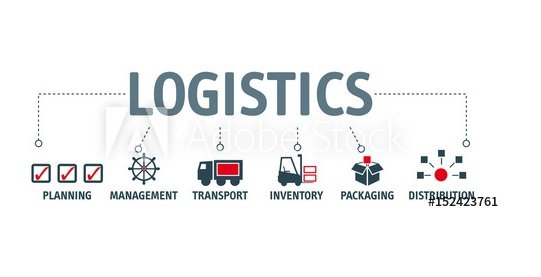
Logistics refers to the skill and discipline engaged in the administration and control of the way in which the flow and energy, goods, information and related resources take place. In the present scenario, the term Logistic has a vast scope which include the flow of raw materials to manufacturers for from suppliers and final delivery of finished products to end user.

Definition of Logistics


According to Council of Logistics Management (CLM) :
“Logistics is the process of planning, implementing and controlling the 
efficient, cost-effective flow and storage of raw material in-process inventory, finished goods and related information from point of origin to point of consumption for the purpose of confirming customer requirements”.

According to Robert A. Novack : 
“Logistics is an activity involving the creation of time, place, form and possession of utilities within and among firms and individuals through strategic management with the goal of creating products/services that satisfy customer through attainment of value”.

The process through which the procurement, movement and storage of raw materials, semi-finished and finished products are tactically managed through organizations and marketing channels in a way that maximizes the current and future profitability by cost-efficient order fulfilment is known as logistics. Thus, it is a process which integrates inventory, packaging, transportation, material handling, information, and warehousing. The functional responsibility of logistics lies in attaining activities such as relocation of resources, processing of raw materials and maintaining records in the most economical way.
In Indian market scenario, the costs associated with market logistics are higher as compared to the other developed economies. It is approximately 13% of GDP which is much higher than 9% of GDP in USA. This logistical function is also known as the physical distribution function as it is mainly concerned with the physical flow of goods,

Transportation | Definition, Modes, Major Functions & Significance

Transportation

Contents :

  1. Meaning and Definition of Transportation.
  2. Modes or Types of Transportation.
  3. Participants in Transportation
  4. Significance of Transportation
  5. Functions of Transportation.

What is Transportation ?


The main function of transportation is to carry the products to different markets, which may be at different geographical locations. Apart from transporting the goods, the additional values that transportation provides to the customers are providing the products on time, in the quantities demanded, and in the undamaged form. The utility that transportation provides is called ‘place utility’ and the utility which is created by the storage is regarded as “time utility”. Time utility cannot be provided to a customer without the help of transportation activities as the speed and the consistency by which a product is moved from one point to other is determined only by the transportation activities. The activity of transporting something or someone from one point to other or the activities involved in being transported is termed as transportation.

Definition of Transportation :


According to Burkart and Medlik :
“Transportation can be defined as the means to reach the destination and also the means of movement at the destination”.

There are number of elements which can influence the significance of transportation in physical distribution. Transportation plays a crucial role in providing the time and place utility to any product because it impacts the level of customer service provided by the firm; it also influences the other elements of physical distribution and marketing such as inventory control, warehousing, channel management, etc. In many business organizations, one of the vital cost elements is transportation.

Modes of Transportation :


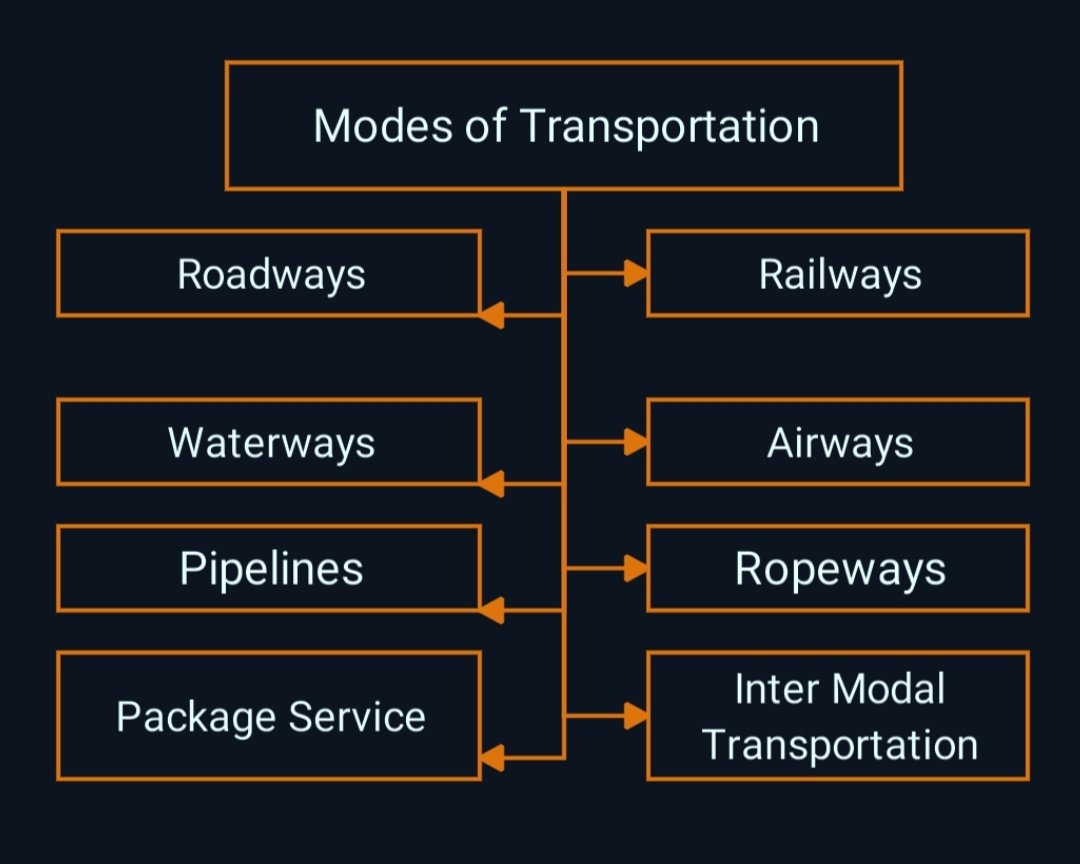
Rail, highways, water, pipeline, and air are the five main modes of transportation. Apart from these the recently emerged forms of transportation are package carrier, ropeways, and inter-modal system. Traffic volume, revenue, system mileage, and the nature of traffic composition are the factors that can be used to determine the comparative significance of each mode. With respect to these measures, each mode of transportation is explained below :

1) Roadways : 
For the agricultural and industrial development of any nation, the most important mode can be seen as the road transport. This method is quite useful in reaching to short and medium distances, even to those places where other modes of transportation do not have their reach. The facility of door-to-door service, which is not possible by other modes, is provided by road transport. In order to bring the trade from the remote and rural areas to the urban and semi-urban areas, road transportation can be used. With the help. of road transportation the basic infrastructure can be built to ensure the connectivity of far-off villages with the rest of the nation. Because of the increased demand and a huge development in industrial and agricultural sector, the significance of road transportation is quite vital for making the product available at the place and time of consumption. In the transport network of the country, the role of road transportation is quite dominant.

2) Railways : 
One of the principal carriers of men and material in the country is railways which plays a very significant role in the trade and commerce activities of the country. It supplies essential commodities. to different locations by transporting across the length and breadth of the country. The industrialization and development of many nations have been carried forward with the help of railways. During the initial phase of industrialization many countries were depending upon the railways as it was the main source of transportation which was available for moving the raw material and finished products from one place to another. Chemicals, heavy material, farm products, automobiles, and also the low value products are transported by railways. They have greater efficiency in case of truckloads which can be shipped at a relatively cheaper price through railways in comparison to smaller modes of transportations. A relatively lesser handling is required in transporting the goods through railways. In order to facilitate easy loading and unloading of material, different firms establish their facilities near to the rail lines.

3) Waterways/Sea : 
In order to ship heavy, non-perishable, and low value goods (such as coal, grain, ore, and petroleum products), the cheapest mode of transportation can be seen as waterways. There is a huge capacity in case of water carriers. Products weighing a minimum of ten times the weight of one rail car can be transported by waterways powered by towboats, tugboats, barges which move in inter coastal canals and inland rivers. In fact the vessels which run in oceans can have thousands of containers. There are a number of markets which are not connected with the waterways without the use of railroad or trucks. The waterway shipping industry is segmented into various parts which are as below :
  • Liner service
  • Tramp shipping
  • Tanker operations
  • Industrial services
Dry bulk carries, container ships, tankers, and special vessels are included in the shipping fleet around the world. In India, approximately 32% of the total GRT (Gross Registered Tonnage) of the shipping fleet is contributed by the dry bulk carriers and 33% of total fleet is accounted by the tankers.

4) Airways : 
Among all the other modes of transport, the least hazardous mode can be considered as the airways. The cost of air transportation is quite high; thus, it is mainly used for the transportation of high valued perishable products with limited life span. The facility of air cargo is mainly concentrated near the gateway airports e.g. Delhi, Mumbai, Kolkata, Chennai, and Bangalore. About 87% of the total air cargo is handled by these airports in India. Anticipating the growing needs of cargo airways and passenger airways, the Government of India is inviting the interested private players in the air transport services and its associated services such as airports.

5) Pipelines : 
The use of pipeline for transportation of petroleum was first done by Samuel Van Syckel in the year 1870 in Pithole, Pennysyivania. The face of transportation was changed after twenty years by Standard Oil Company of North-Western Pennysylvania. The pipeline transportation was first use for transporting the petroleum but its scope is enhanced by using it for transporting many commodities such as coal in slurry form, chemicals, natural gas, iron ore fines in slurry form, etc. Although the initial cost of setting up the network of pipelines is quite high but later it helps in reducing the operating costs. Almost all public and private sector petroleum refineries use the pipelines for the transportation of petroleum products. These can be thought of as the most automated mode of transportation which mainly carries the products of a shipper as it belongs only to a certain shipper. Mainly chemicals or petroleum products are transported by the pipelines. There are numerous environmentalists who have. their concerns regarding the effect of pipeline on the environment such as harm to plants and animals due to installation and leaks.

6) Ropeways : 
Out of the total geographical area of India, over 16% is comprised of hilly locations. The problem of transportation is quite prominent in these locations due to the long circuitous paths. Sometimes, the transportation of essential commodities and other materials is quite vital due to their strategic significance in the defence programs of the nation. Ropeways can be seen as the economical and faster mode of transportation in the hilly areas, especially when the oil shortage is going on. The various merits of ropeways are as follows :
  • Lesser harm to the ecology.
  • Shorter routes can be used to reach to the remote hilly locations.
  • The cost of ropeway transportation is lesser than the other modes.
  • Over short distance, thee transportation of bulky products is quite fast.

7) Package Service : 
The country, in last few decades, has faced a huge problem related to the availability of transportation for small-shipments. Due to the different costs associated with the terminal and line haul operations, the small-shipment service providers charged quite high prices. The providers cannot decrease the prices as different overheads impose certain minimum charges on them irrespective of the size of shipment and the distance of destination. Due to such obstacles, some private companies realized the potential of specialized services for package-service or small-shipment market.

8) Inter-modal Transportation :
Taking the economic advantages of two or more modes of transportation by combining them with each other to facilitate the transportation service at a least possible total cost is known as inter-modal transportation. In order to combine the various modes of transportations, various efforts are carried out over the years. The concept of inter modal transportation is not a new concept, it has originated during the early years of 1920s but in order to control the monopoly practices, different restrictions were imposed on the cooperative practices. During 1950s, this mode started gaining popularity as the advantages of road and rail transportation were combined to for a an inter-modal transportation known as piggy back service. The flexibility of motor or road transport for low distances and the low line-haul cost of rail for longer distances were combined to form this common inter-modal transportation. In order to gain the higher efficiency and effectiveness of transportation, the popularity of inter-modal transportation has increased significantly in recent years.

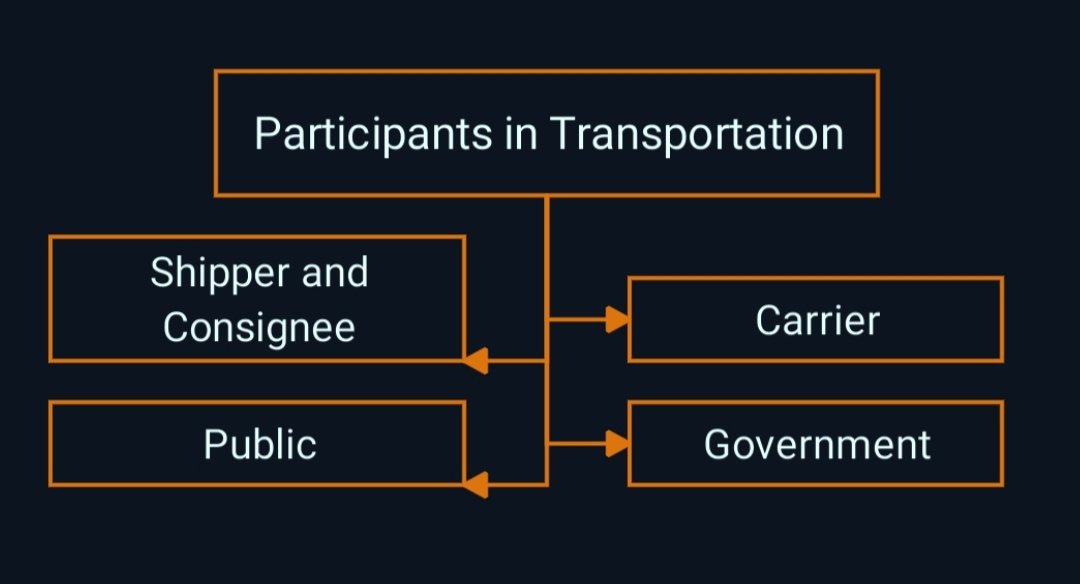
Participants in Transportation :


Following are the participants that together facilitate the transportation activities :

Participants in Transportation


1) Shipper and Consignee : 
The objective of moving the goods from their origin to their destination within the stipulated time and at the lowest possible expense is shared by both the shipper and the consignee. Certain pick-up time, delivery time, zero loss and damage, precise and prompt information transaction, and predictable transit time should be included in these services.

2) Carrier : 
The intermediary between the consignee and the shipper is known as carrier. Maximizing the revenue from the transaction and minimizing the cost of carrying out the transaction are the main motives of the carrier. Another objective of the carrier is to minimize the cost of moving the product such as labour, fuel, vehicle cost etc. While maximizing the prices being charged from the shipper and consignee. The latter objective is aimed at earning more profits.

3) Government : 
As the transportation has a huge impact on the performance of the economy, it becomes a very crucial factor; thus, government has a higher level of interest in it. In order to maintain a sustainable economic development, a stable and efficient transportation is important. The efficient movement of goods to all the markets is facilitated by the transportation and hence the availability of the product can be ensured at a reasonable price. Some governments participate more actively in different activities and practices associated with transportation. This can be in the form of ownership, regulations, and promotions.

4) Public : 
The main concerns of common public related to the transportation are its cost effectiveness, accessibility, and different safety and environmental standards. The need of transportation facilities is determined primarily due to the public because of the fact that they require different goods at least possible cost at their doorstep. Because of different types of interaction between the above mentioned participants, the relationship is quite complex among them. There can be different types of conflicts which can result among the parties with micro-interest government, and the public. Thus, in order to have a smoother process, some kind of regulations is mandatory.

E-Commerce | Definition, Types, Features, Advantages & Disadvantages

E-Commerce

Contents :
  1. Meaning and Definition of E-Commerce.
  2. Types of E-Commerce.
  3. Features of E-Commerce.
  4. Advantages of E-Commerce.
  5. Disadvantages of E-Commerce.
  6. Alternative E-Commerce Strategies.

WHAT IS E-COMMERCE ?


Electronic Commerce commonly known as E-commerce or e-Commerce which denotes different types of transactions involved in commercial activities. It contains both organizational as well as individual activities which include the processing and transmission of digitized data such as text, pictures, sound and video, etc.

E-commerce has developed a new environment with the help of Internet in business transactions and processing. Here information is provided direct to the consumers about the products they want to buy and the platform is set for product advertisements. It also permits negotiations, order for raw materials, settlement of financial transactions etc.

Electronic commerce is a combination of communication services, data management and security mechanisms which provides a platform to organizations where they can share information about the selling of goods and services :

1) Communication Services : 
Electronic transfer of information from buyer to seller is supported by communication services.

2) Data Management : 
It is exchange and storing of data in a constant, format which enable easy exchange of information.

3) Security Mechanisms : 
Security mechanisms provides following functions :
  • Authenticates the source of information
  • Guarantees the integrity and privacy of information.
E-commerce covers many services over the Internet for example, customer service, banking, billing, marketing, retailing, secure distribution of data, corporate sector purchasing and other value-added services.

Meaning and Definition of E-commerce :


The term e-commerce (Electronic Commerce) refers to all types of business operations and transactions that are executed through Internet and other electronic technologies.

“E-commerce is a virtual business environment in which information moves electronically via Internet related to buying, selling, transportation of goods and services“.

According to P.T. Joseph :
“E-Commerce comprises core business processes of buying and selling, goods, services and information over the internet”.

According to Kalakota and Whinston :
“Electronic Commerce can be defined from following four perspectives :

1) Communications Perspective : 
Electronic commerce is the delivery of information, products/services, or payments via telephone lines, computer networks, or any other means.

2) Business Process Perspective : 
Electronic commerce is the application of technology toward the automation of business transactions and workflows.

3) Service Perspective : 
Electronic commerce is a tool that addresses the desire of firms, consumers, and management to cut service costs while improving the quality of goods and increasing the speed of service delivery.

4) Online Perspective :
Electronic commerce provides the capability of buying and selling products and information on the Internet and other online services.”

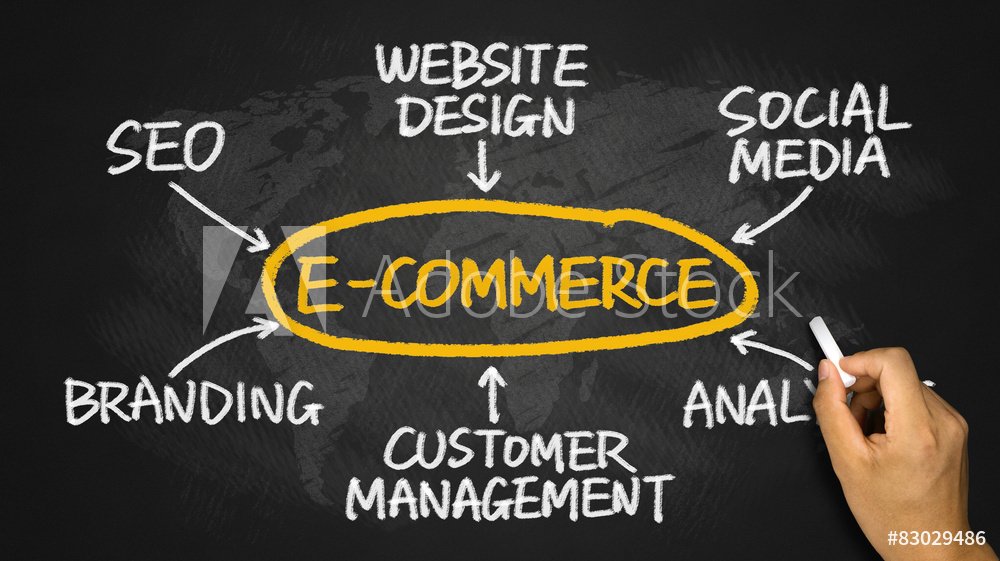
E-Commerce

New Product Development | Definition, Need, Classification & Failure of New Products

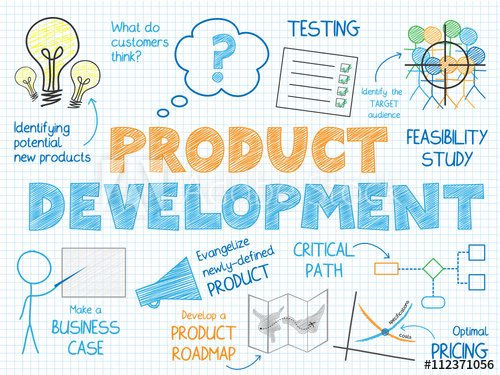
New Product Development

Contents : 

  1. Meaning & Definition of New Product Development.
  2. Need for New Product Development.
  3. Failure of New Product.
  4. Booz, Allen, and Hamilton Classification Scheme for New Products.

What is New Product Development ?


The goods and services that vary considerably in terms of their attributes or intended usage in contrast with the goods manufactured previously by the same firm are termed as “‘new products”. It is a difficult task to define a new product.
It involves novel ideas and offerings which are entirely different and new for the customers. Moreover, the relative view is considered highly useful in defining a new product, as the potential consumers who will be using the product for the first time, may identify opportunities or problems for consideration.
The concept of a new product is highly multi dimensional, which has capabilities of satisfying the wants of desirous and interested stockholders. It also provides strategic competitive advantage to significant number of interested consumers. This also leads to significant opportunity for a firm to create value in the competitive market. There are various perspectives from which a new product could be defined.

Definition of New Product Development 


According to Musselman and Jackson :
“A product is said to be a new product when it serves an entirely new function or makes a major improvement in a present function.”

According to Kotler : 
“New product mean original products, improved products, modified products and new brands which are developed by the firm through its own research and development efforts and includes those products which the consumers see as new. A new product is thus perceived differently by different people. It is a need satisfying concept with benefit for buyers bundle of need satisfying features, for marketers, a way to add value for intermediaries, an opportunity to design, for R&D and to assemble and process for production department.

After product planning, the next step is product development. The process of identifying the probability of producing a product is called product development. Under this process, the feasibility and profitability of producing a new product is assessed before making a final decision.

According to Limpson and Darling :
“Product development involves the adding, dropping, and modification of item specifications in the product line for a given period of time, usually one year”.

New product development involves all the phases and functions in launching a new product or service. The process starts with emergence of a new idea and ends with the commercialization of new product in the market. New product development encompasses competitive pressure, cost challenges and increased consumer expectations which helps the firm to develop an enhanced and better-quality product for the market. Through acquisition or development, a firm can introduce new products in the market. The 
following are three forms of acquisition :
1) By buying other companies.
2) By acquiring patents from other companies.
3) By purchasing license or franchise from another company.

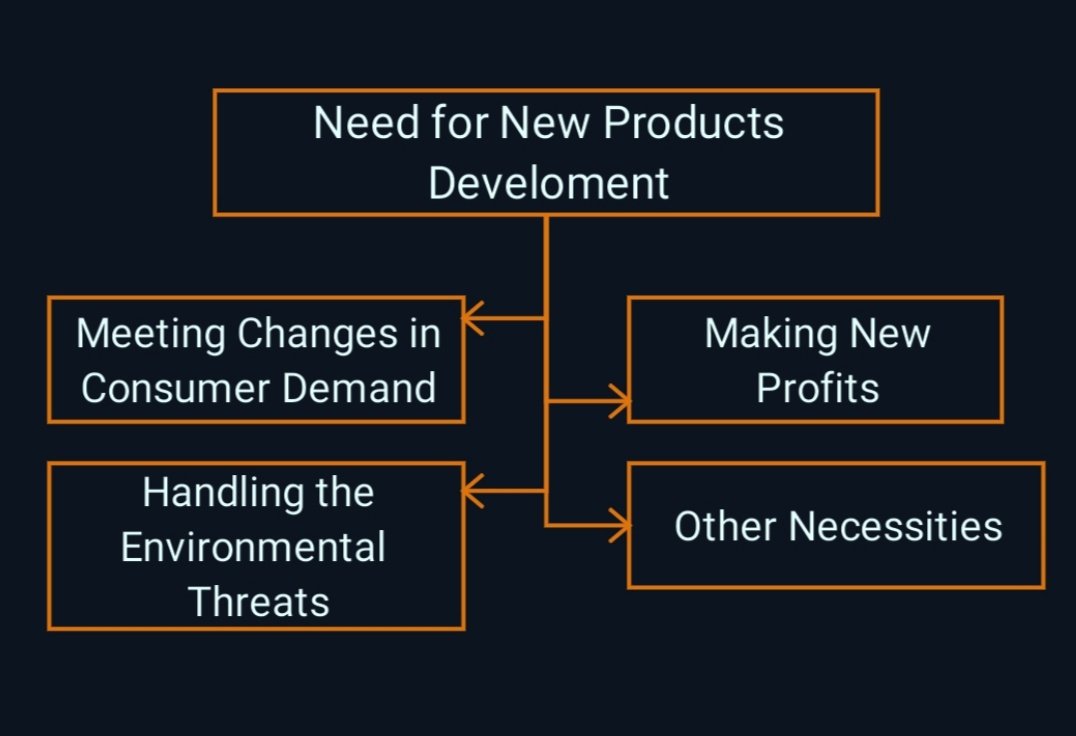
Need for New Product Development 


The organizations which are aiming at advanced levels of growth have to consider the following points:

1) Meeting Changes in Consumer Demand :
Change is a universal phenomenon in today’s time of science and technology. For example, a quick change in the food habits, comfort preferences, tastes, customs and traditions, needs and expectations, etc. can be seen. The organizations need to keep an eye on these changes taking place in their surroundings.
Customers always give preference to the products which are better in terms of quality, fashion, price, etc. An organization has to proactively respond to such vibrant demands, which in turn results in innovations in products and services. By doing this, the organizations can keep themselves updated and can strengthen their relationship with the customers.

2) Making New Profits : 
Manufacturing new products is important for earning profits; since existing products have less scope for enhancing profit levels, while new products have vast scope for it. On reaching the maturity stage of PLC, the gains acquired from the existing products start decreasing and diminishes gradually till the product reaches the decline stage. Hence, it becomes quite necessary for the organizations to come up with the new and innovative products that can replace the old product which is on the verge of declining. Such new products play an important role in growth of the organization and sometimes they are the only source for the organization to find new prospects of profit.

3) Handling the Environmental Threats :
There are various environmental threats faced by a business organization. One way to handle these threats is to find out a new product which is capable enough to combat against it. These threats spring from various environmental factors, like socio-economic, technological, political, and demand and supply, etc. Moreover, the biggest threat that is always present in such environment is competition in the market and products.
Hence, it becomes vital to fight these risk factors by introducing new products. More prospects of growth and development are opened through it, which further ensures endurance and feasibility for the organization.. I also distributes the risk factor among the old and new products.

4) Other Necessities : 
The other strategic needs for new product development are as follows :
  • New products can provide the organization a source for gaining competitive edge.
  • They can ensure long-term financial return on the investments made. They also help in optimum utilization of the available resources.
  • New products make best use of research and development.
  • They can provide new opportunities for making changes in the strategic plans of the company.
  • New products can bring most out of the marketing practices and brand equity.
  • It enhances the corporate image of the organization/brand.


Franchisee | Definition, Types, Examples, Role, Advantages & Disadvantages

✏ Table of Content : Franchisee Meaning Franchisee Definition Franchisee Examples Types of Franchisee Responsibilities of Franchisee 14 Steps to Becoming a Franchisee Advantages of Franchisee Disadvantages of Franchisee Franchisee vs Franchisor What is a Franchisee ? A franchisee is an individual or entity that holds the rights and license to operate a business model, … Read more